CIT GROUP INC
CIK 1171825 · Ver en SEC EDGAR ↗
Primera presentación ante la SEC: 21 de junio de 2007 · Último: 21 de junio de 2007
En esta página
- Biografía Trayectoria profesional y perfil público, cuando estén disponibles.
- Insider en Empresas de las que esta persona es un insider informante.
- Transacciones de información privilegiada Cada acción que esta persona compró o vendió, de las declaraciones del Formulario 4.
- Derivados Opciones y otras tenencias de derivados reportadas por esta persona.
- Posiciones iniciales Las participaciones que esta persona tenía cuando comenzó a informar.
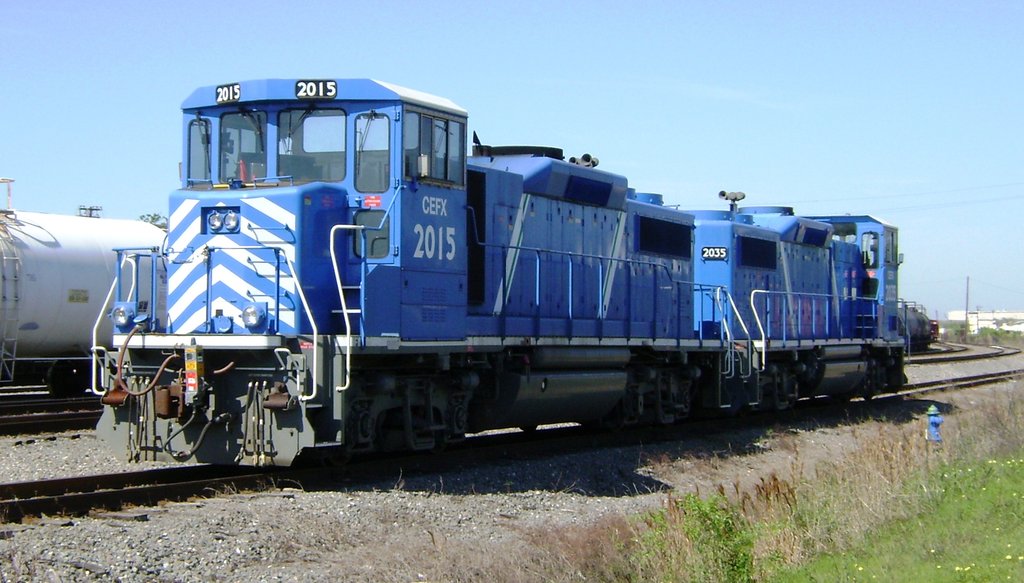
CIT Group (CIT), a subsidiary of First Citizens BancShares, is an American financial services company. It provides financing, including factoring, cash management, treasury management, mortgage loans, Small Business Administration loans, leasing, and advisory services principally to individuals, middle-market companies and small businesses, primarily in North America. Under the reporting mark CEFX and CITX, it leases locomotives and railroad cars to rail transport and shipping companies in North America. It also operates a direct bank. In January 2022, CIT was acquired by First Citizens BancShares.
Leer más
CIT Group (CIT), a subsidiary of First Citizens BancShares, is an American financial services company. It provides financing, including factoring, cash management, treasury management, mortgage loans, Small Business Administration loans, leasing, and advisory services principally to individuals, middle-market companies and small businesses, primarily in North America. Under the reporting mark CEFX and CITX, it leases locomotives and railroad cars to rail transport and shipping companies in North America. It also operates a direct bank. In January 2022, CIT was acquired by First Citizens BancShares.
History
Founding and early history
On February 11, 1908, Henry Ittleson founded the Commercial Credit and Investment Company in St. Louis, Missouri to finance accounts receivable at small companies.
In 1915, the company moved its headquarters to New York City and renamed itself Commercial Investment Trust (CIT). By that time, the company provided financing for wholesale suppliers and producers of consumer goods. The company added automobile financing to its product line in 1916 through an agreement with Studebaker, the first of its kind in the auto industry. During World War I, CIT financed the manufacture of 150 submarine chasers. It also added consumer financing of radios through an agreement with Thomas Edison, Inc. During the Roaring Twenties following the war, consumer spending rose dramatically and CIT prospered in its consumer appliance, furniture, and automobile financing groups. In 1924, CIT incorporated in Delaware and became a public company via an initial public offering on the New York Stock Exchange. CIT began offering factoring in 1928 and expanded operations into Europe in 1929.
With international tensions rising prior to World War II, CIT closed its German operations in 1934. Arthur O. Dietz succeeded Ittleson as president of the company in 1939. During the war, CIT offered its 2,000 employees a month's bonus, life insurance, and a guaranteed job on return if they served in the United States Armed Forces. Between 1947 and 1950, the company's net income rose from $7.3 million to $30.8 million. Ittleson died at age 77 on October 27, 1948.
1950s - 1990s
In 1957, the company moved into a new building at 650 Madison Avenue in Manhattan. In 1958, to diversify, the company acquired Picker X-Ray Corporation, maker of X-ray and radiation equipment, for $1.9 million. In 1960, Walter Lundell succeeded Dietz as president of the company. In 1964, it acquired Gibson Greeting Cards for $36 million. In 1965, it acquired Meadow Brook Bank for $106.7 million in stock. In 1969, CIT entered the personal and home equity loan and leasing business and left auto financing. In 1979, restrictive banking rules forced CIT to sell its bank, National Bank of North America. CIT was acquired by RCA Corporation in 1980. RCA promptly sold CIT's four manufacturing businesses: Picker X-Ray, Inc., Gibson Greeting Cards, Inc., All-Steel, Inc. (office furniture), and Raco, Inc. (wall boxes for electric switches and outlets.) The Madison Avenue building was sold in 1982 as the company moved to a newly constructed headquarters facility in Livingston, New Jersey in 1983.
In 1984, CIT was sold to Manufacturers Hanover Trust. In 1989, Manufacturers Hanover Trust sold 60% of CIT to Dai-Ichi Kangyo Bank of Japan.
In 1991, the company acquired Fidelcor Business Credit Corporation, which increased its services to small businesses. In 1992, CIT opened 15 new offices in 7 states.
In 1997, the company became a public company via an initial public offering that raised $850 million.
On November 15, 1999, CIT acquired Toronto-based Newcourt Credit Group in a $4.2 billion transaction, which created one of the largest publicly owned leasing companies.
Early 2000s
In 2001, Tyco acquired CIT for $9.2 billion in stock. CIT was renamed as Tyco Capital.
Tyco ran into operating troubles and sold or spun off non-core operations, including CIT. On July 8, 2002, Tyco completed its divestment of its Tyco Capital business through an initial public offering, via the sale of 100% of the common shares in CIT Group Inc.
In 2004, the company acquired the technology-leasing unit of GATX for about $200 million in cash.
In 2006, CIT moved its global headquarters back to New York City, opening a new headquarters at 11 West 42nd Street, across from the New York Public Library.
Under the leadership of CEO Jeff Peek, assets at CIT rose 77% from 2004 to the end of 2007 as it acquired companies in education lending and subprime mortgages. Those acquisitions turned out to be disastrous for the company and in the following eight quarters, CIT reported more than $3 billion in losses.
Bankruptcy and reorganization
On July 1, 2008, the company announced the sale of its home lending division to Lone Star Funds for $1.5 billion in cash and the assumption of $4.4 billion in debt and the sale of its manufactured housing loan portfolio, with a face value of $470 million in loans, to Vanderbilt Mortgage and Finance for approximately $300 million.
In December 2008, CIT became a bank holding company to receive $2.33 billion in funds from the Troubled Asset Relief Program (TARP).
On July 15, 2009, CIT's request for Federal Deposit Insurance Corporation loan guarantees was rejected.
On July 19, 2009, the company received $3 billion from its bondholders including Pacific Investment Management Company (PIMCO) to delay bankruptcy.
On November 1, 2009, CIT filed a prepackaged bankruptcy under Chapter 11.
On December 10, 2009, CIT emerged from bankruptcy protection.
As part of the reorganization plan, CIT named seven new independent directors. On January 19, 2010, Peter J. Tobin, a member of the board of directors, was named interim chief executive officer, replacing Jeff Peek, who resigned effective January 15, 2010. On February 8, 2010, former Merrill Lynch CEO John Thain was hired as chairman and chief executive officer.
In June 2014, the company acquired Direct Capital.
On August 3, 2015, CIT Group acquired OneWest Bank, established in 2009 by a consortium of private equity investors led by Steven Mnuchin, for $3.4 billion in cash and stock.
2016 to present
In March 2016, CEO John Thain retired and was succeeded by Ellen Alemany, a member of the board of directors.
In April 2017, the company sold its aircraft lease business to Avolon for $10.38 billion.
In October 2017, the company sold Financial Freedom, acquired as part of the acquisition of OneWest Bank, and its reverse mortgage portfolio.
In October 2018, the company sold its European rail leasing business, NACCO, which was its last overseas operation.
In January 2020, CIT acquired Mutual of Omaha Bank.
In January 2022, CIT was acquired by First Citizens BancShares.
Fuente: Wikipedia (Inglés), CC BY-SA 4.0 · Ver en Wikipedia ↗
Insider en
Transacciones de información privilegiada
Cambio de precio frente a la cotización actual, ajustado por división para acciones corporativas desde la presentación, no comparado con índice de referencia, no anualizado, no ponderado por tamaño
| Fecha | Ticker | Código | Acciones | Precio | Valor | Poseído después | Δ propio | A/D | vs ahora |
|---|---|---|---|---|---|---|---|---|---|
| 13 de agosto de 2010 | TIPT | S | 435 000 | $0,23 | $100 050 | 0 Indirecto | -100,00% | Enajenado | 7873,9% (precio al 2026-08-20) |
| 27 de junio de 2007 | TIPT | P | 6 981 250 | $15,00 | $104 718 750 | 6 981 350 Indirecto | +6981250,00% | Adquirido | 22,3% (precio al 2026-08-20) |
P = Compra en mercado abierto · S = Venta · A = Concesión/premio · M = Ejercicio de opción · G = Regalo · F = Retención de impuestos
Las transacciones de información privilegiada no son una recomendación; las ventas a menudo se deben a motivos de liquidez o fiscales.
Posesiones de derivados (Formulario 4 Tabla II)
Opciones, RSUs y valores convertibles reportados en el Formulario 4 Tabla II.
| Fecha | Ticker | Valor | Subyacente | Precio de ejercicio | Vencimiento | Acciones | A/D |
|---|---|---|---|---|---|---|---|
| 13 de agosto de 2010 | TIPT | Common Stock Warrant | Common Stock (435 000) | $17,00 | 30 de septiembre de 2018 | 435 000 | Enajenado |
| 30 de septiembre de 2008 | TIPT | Common Stock Warrants (right to buy) | Common Stock (435 000) | $17,00 | 30 de septiembre de 2018 | 435 000 | Adquirido |
El precio de ejercicio/conversión está en blanco cuando no aplica (p. ej., RSUs).
Propiedad inicial (Formulario 3) 1 tenencia
Valores poseídos al convertirse por primera vez en un insider, según el Formulario 3 de la SEC.
| Fecha | Ticker | Valor | Acciones | Propiedad |
|---|---|---|---|---|
| 21 de junio de 2007 | TIPT | Common Stock | 100 | Indirecto |